
Employers must use an employee’s National Insurance category letter when running payroll to work out the National Insurance Contributions they both need to make.
Below is a summary of NIC Category Letters applicable to the current tax year:
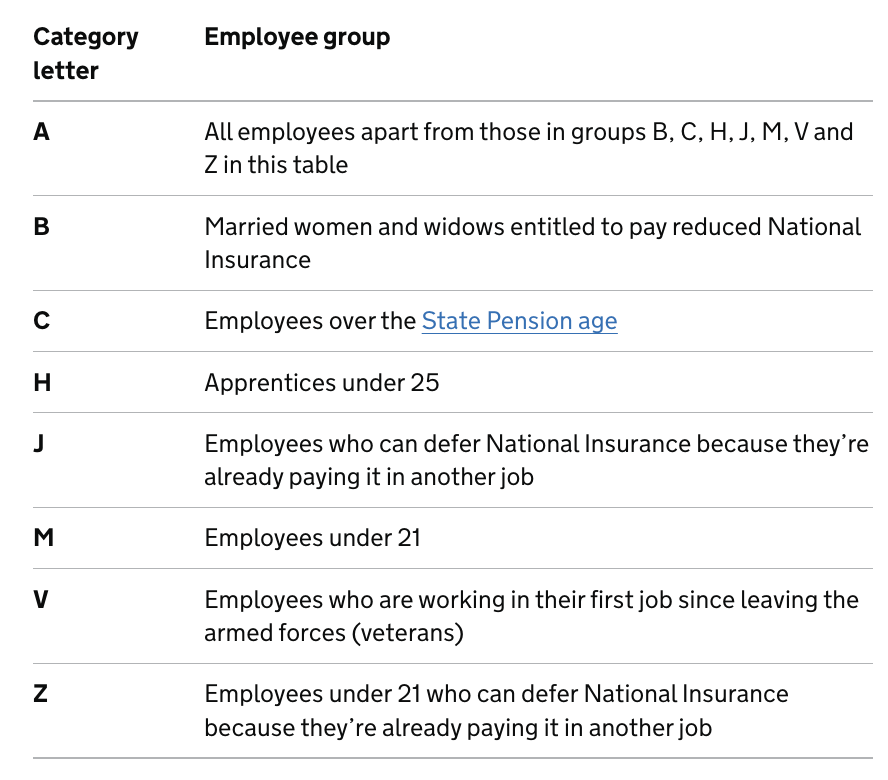
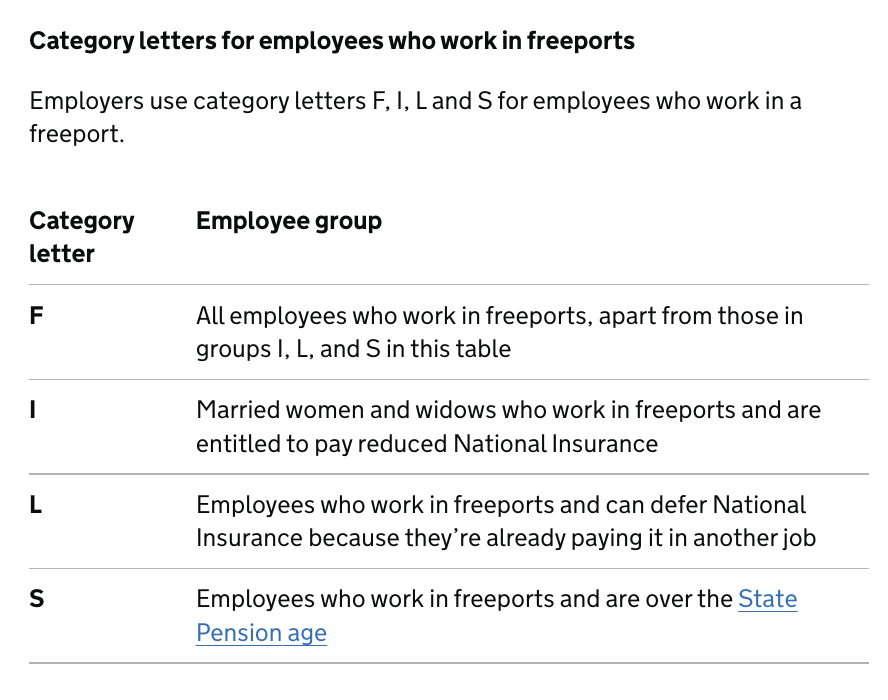

Note: A ‘Default retirement age’ (a forced retirement age of 65) no longer exists and an employee can keep working after State Pension age.
The UK State Pension age is currently 66 for most people, but is rising to 67 between 2026-2028 and then 68 between 2044-2046, depending on the employee's birth date.
When an employee reaches state pension age, they should be on NIC letter 'C'. The software will prompt you to amend the letter in the pay period in which they reach state pension age.
Although there are no employee NI contributions due after state pension age, employer NI contributions remain due for these employees.
If an employee continues to work past state pension age, tax will still be due on the employee's salary.
If you get an error message 'Employee is under 16 and should be on NI letter X' when trying to add a 16 year old to the Employees section - change the DOB to make the employee 1 year older (ie so if they are born in 2009, change to 2008 temporarily). It will allow you to put them on NI letter M > save changes. Then alter the DOB to the correct year and save changes again.
FAQs
Q. I've received a CA2700 certificate for an employee, how do I process this in BrightPay?
A. A CA2700 certificate is issued by HMRC when an employee has more than one job and has already paid sufficient National Insurance contributions through their other employment. It authorises you to apply a deferred NI rate in BrightPay.
- Which job is designated as their main employer (where standard National Insurance is deducted).
- Which jobs are approved for deferred National Insurance (the reduced 2% rate).
To process a CA2700 certificate in BrightPay:
- Go to Employees section and select the employee
- Click the Tax/NICs/RTI tab
- Next to the NI letter, click Change
- Under the Circumstances section, select: "Employee has another job in which they pay NICs on earnings at or above the Upper Earnings Limit"
- This will change the employee's NI category to letter J
- Save
With NI category J applied, National Insurance will be calculated at 2% which is the deferred rate. Employer NI continues to be calculated at the full rate as normal (15%).
If you are unsure on the process or if it applies to a specific employee, please check directly with HMRC before making any changes.
Comments
0 comments
Article is closed for comments.